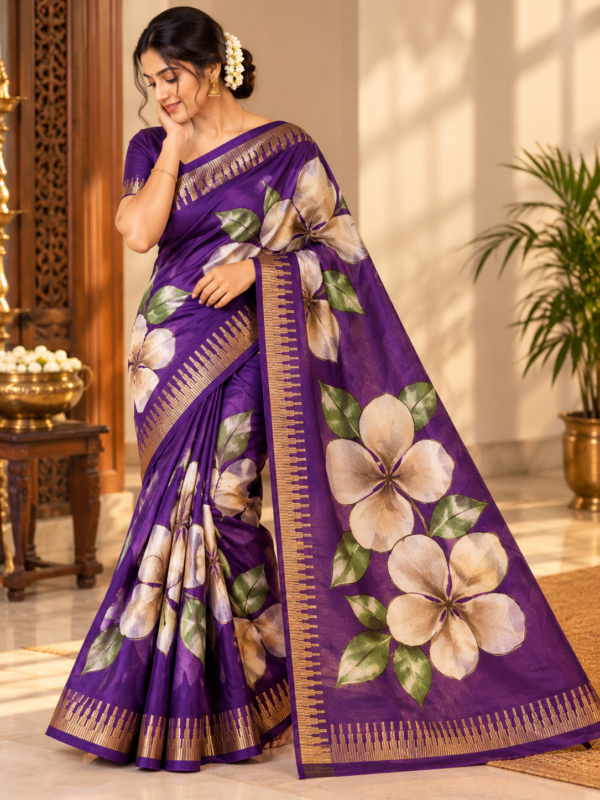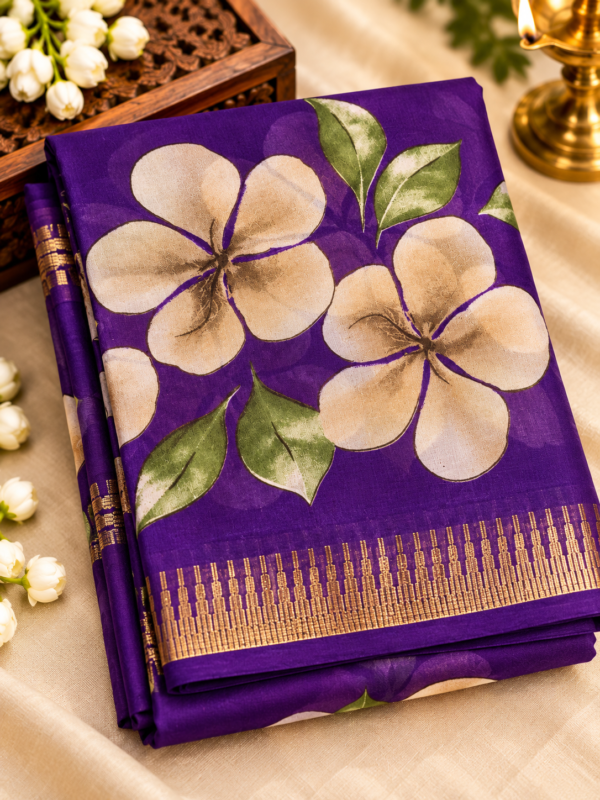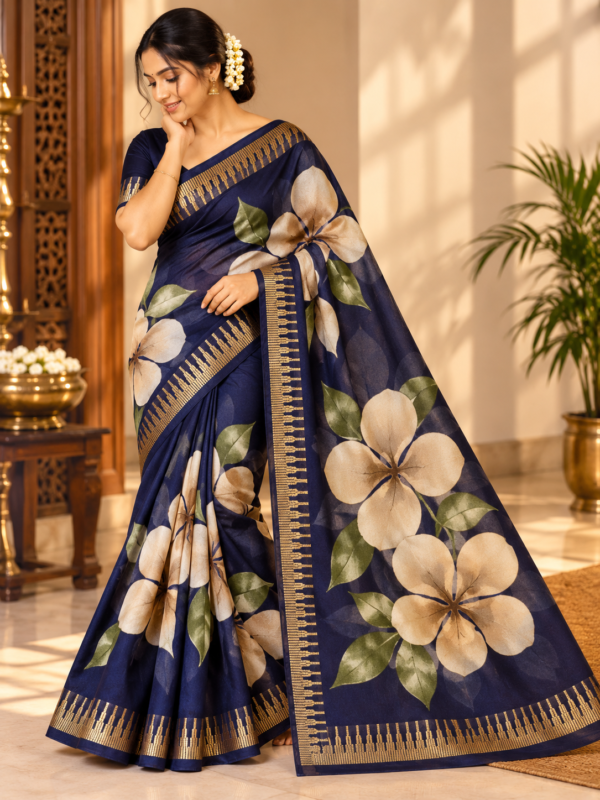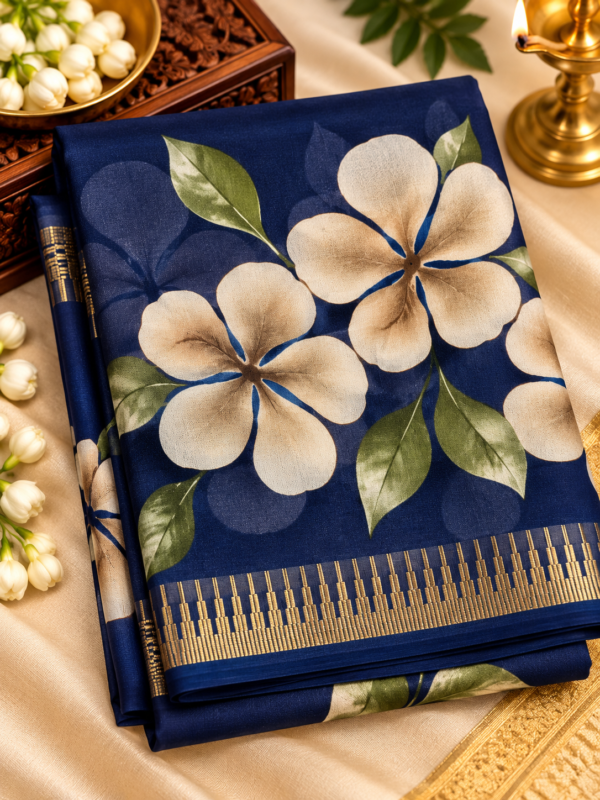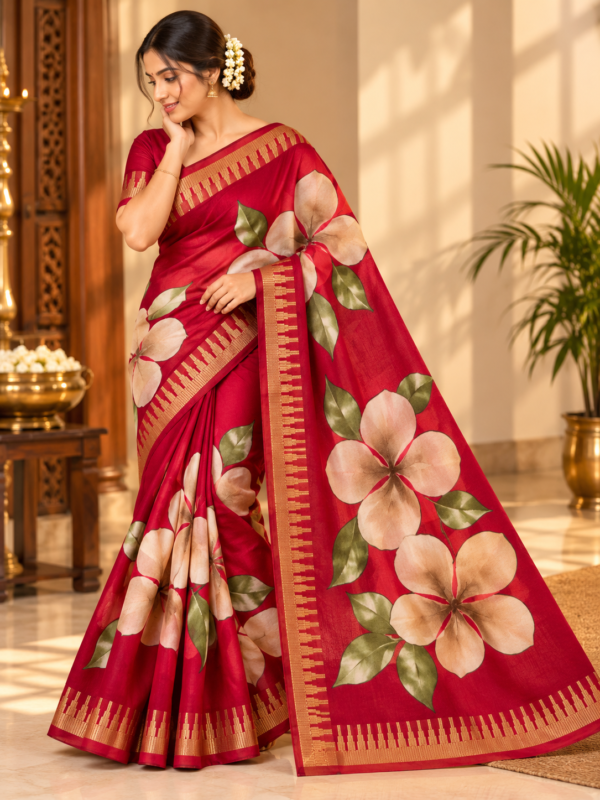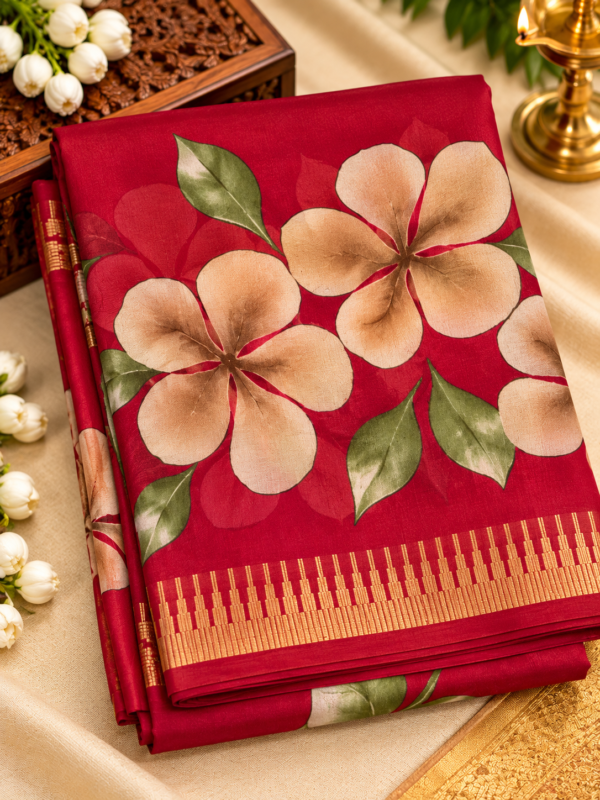
Mysore Silks / Mysuru Silks
The story of Mysore silk sarees is rooted in the princely state of Mysore, where the Wadiyar rulers supported the development of local industries alongside the arts and courtly life. Silk had long held prestige across India, moving through trade networks and serving as a valued material for clothing and ceremonial use.
Mysore’s particular tradition, however, took shape through regional patronage, production, and skilled work. It should therefore be understood as a distinctive local history within India’s much broader relationship with silk, rather than as the origin of Indian silk weaving itself.
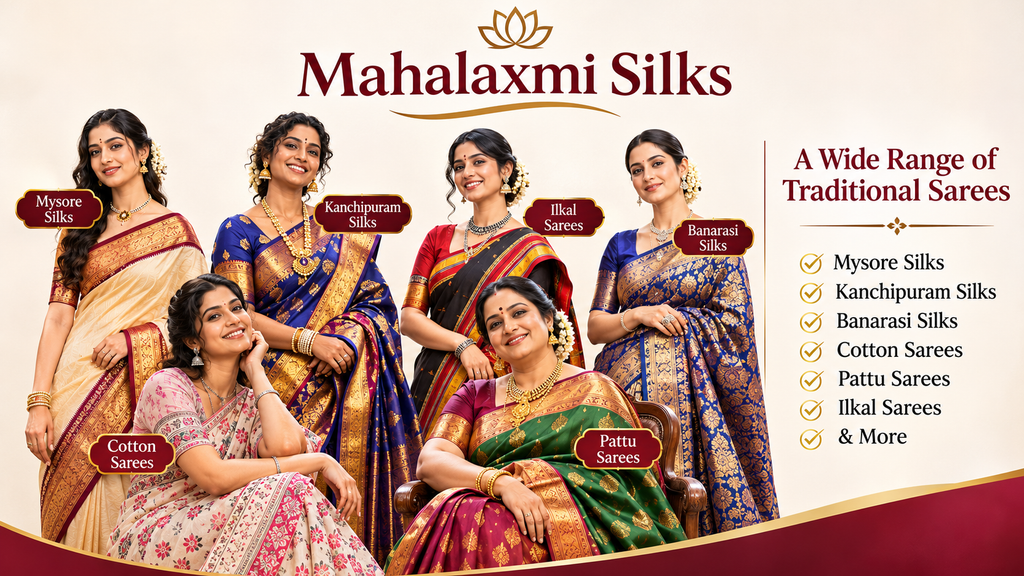
In the early twentieth century, Maharaja Krishnaraja Wadiyar IV encouraged efforts to strengthen silk production and weaving in the region. Sericulture—the raising of silkworms and cultivation of mulberry—provided an important foundation, while trained workers brought together knowledge of reeling, dyeing, and weaving. The establishment of organized manufacturing in Mysore helped make production more consistent and supported the growth of a recognizable regional product. This combination of state support, local resources, and specialized labor played a central role in building the saree’s reputation.
The name Mysore Silk is associated with a specific regional identity and production tradition, not simply with any silk saree made in a similar style. Over time, the material became known for its refined appearance and its association with formal occasions. In the princely period, silk clothing was closely connected with royal presentation, ceremonies, and social standing. As production expanded beyond the court and its immediate circles, the saree became accessible to a wider public, while retaining those associations of dignity and celebration. Its appeal today reflects both this history and the continuity of skills that have shaped Mysore’s silk-making tradition across generations.
Mysore silk is often recognized by the way its fabric feels and reflects light. A well-made saree commonly has a smooth, supple body with a soft, even lustre rather than a heavily textured surface. Its colors may appear rich and clear, with shades ranging from jewel-like reds and greens to refined pastels and deeper, traditional tones. These qualities are familiar associations, not a guarantee that every saree will look or feel identical. The final effect depends on the silk yarn, the way it is dyed and woven, and the finishing applied after weaving.
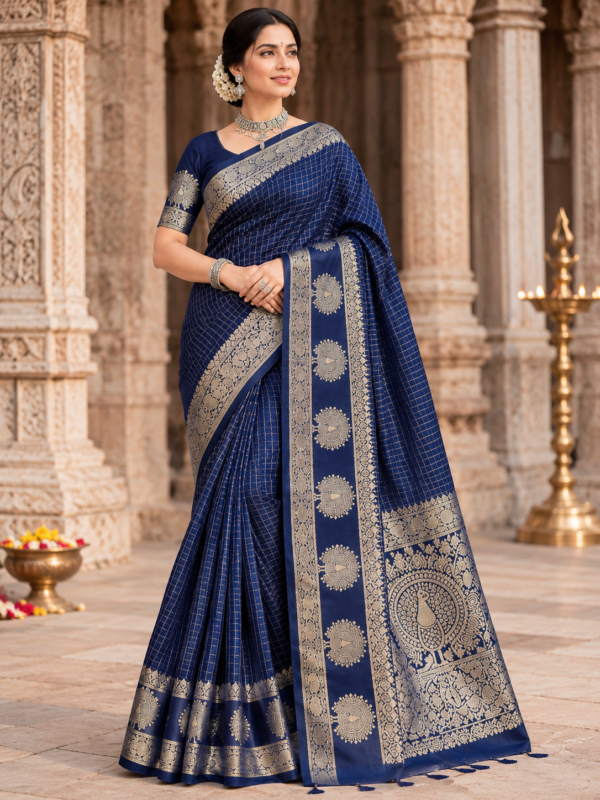
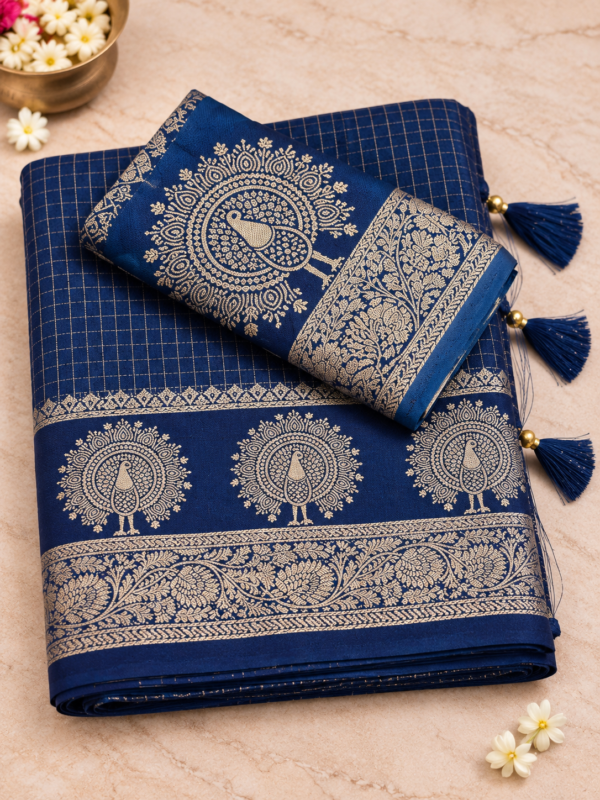
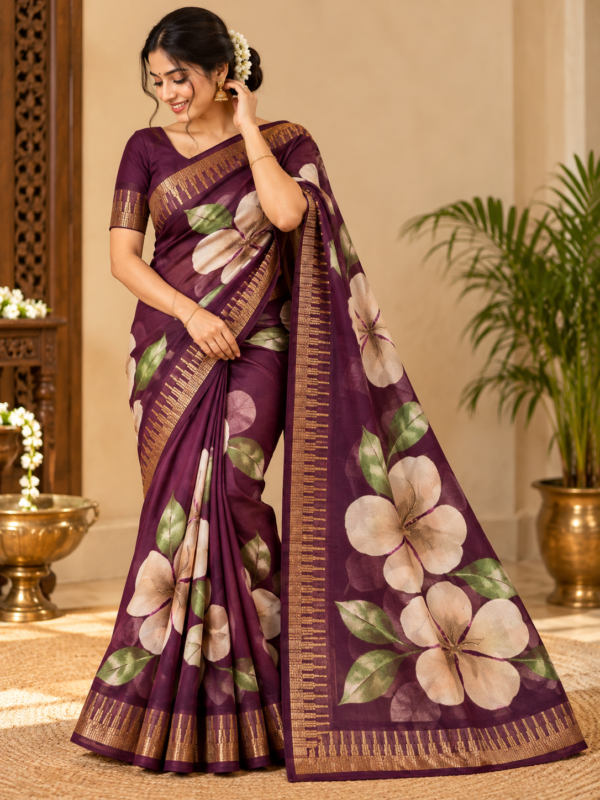
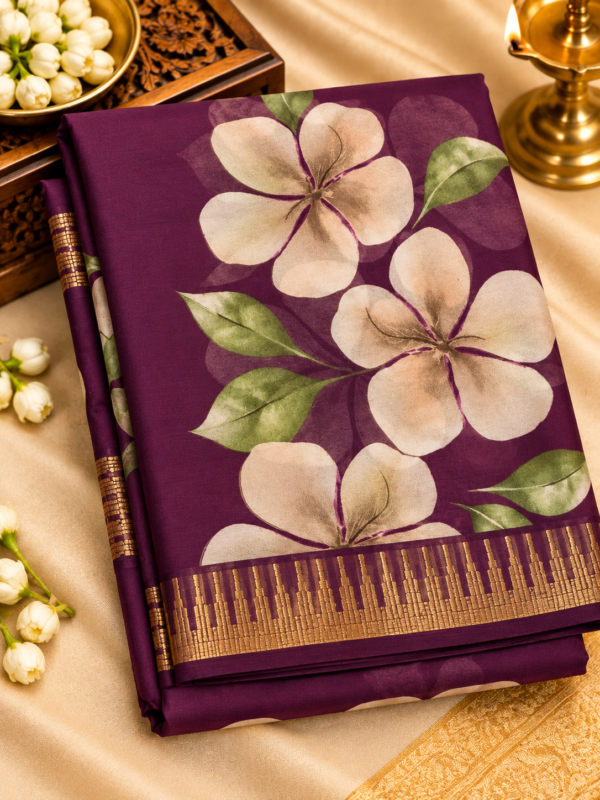
Many Mysore silk sarees are admired for a relatively restrained design vocabulary. The body may be plain or carry small, spaced motifs, while a contrasting or complementary border gives the drape definition. The pallu can introduce more visual detail, sometimes through woven patterns or zari accents. Zari is a decorative thread traditionally valued for its metallic brilliance and its ability to highlight borders, motifs, or pallu designs. Its appearance and composition can vary, however; a gold-colored detail should not automatically be taken to mean that it contains a particular precious metal.
Craft and care also shape how a saree presents itself over time. Consistent silk yarn helps create an even surface, while careful dyeing supports color clarity. Weaving determines the placement and character of motifs, borders, and pallu details; finishing can influence the fabric’s drape, sheen, and hand feel. Because designs, materials, and construction differ across makers and products, shoppers should not expect every Mysore silk saree to share the same pattern or level of ornamentation. Before buying, review the product description and any available authenticity or material information, including details about the silk and zari. Gentle storage and handling can help preserve the fabric’s smoothness and appearance: avoid snagging it on sharp objects, keep it clean and dry, and follow care guidance provided by the seller. These details make it easier to assess a saree on its own merits, rather than relying on a single visual cue as proof of quality.
In Karnataka, Mysore silk occupies a place beyond clothing: it marks occasions when families gather, observe rituals, and reaffirm identity. Brides may wear it during wedding ceremonies, while relatives choose silk for receptions, festivals, temple visits, and religious observances. Its sheen lends formality, yet the fabric also belongs to family celebrations, where wearing a treasured saree can connect the present gathering with generations past.
Choice is rarely arbitrary: color may suit a ceremony or personal preference, and tastes can shape favored shades and motifs. Border width, zari detail, and ornamentation help signal whether an occasion calls for grandeur or elegance.
The saree is also a meaningful gift, offered to honor a milestone, welcome a new family member, or express respect. A silk saree passed from mother to daughter, or among other relatives, may carry memories of a wedding, a festival, or a family ritual alongside its material value. Even when it is kept for special occasions, its presence can make family history tangible. The giver’s choice of color, design, and level of embellishment can communicate affection and consideration, while the recipient may later associate the garment with the person who gave it. In this way, the saree becomes both attire and a record of relationships.
These customs continue to adapt as tastes and daily lives change. Contemporary wearers may pair traditional silk with a modern blouse, select understated jewelry, or drape the saree in a simpler style. Some prefer restrained borders and minimal embellishment for smaller gatherings, while choosing richer designs for weddings and major festivals. Such choices allow personal expression without setting heritage aside. The fabric’s craftsmanship and cultural associations remain valued, even when styling is less formal or follows current fashion. Across generations, Mysore silk therefore retains its significance not because it is worn in only one prescribed way, but because families continue to make it part of meaningful occasions, gifts, and shared memories.
A Mysore silk saree can appeal through its fluid drape and distinctive sheen, qualities that bring refinement to both traditional styling and contemporary looks. Its visual character makes it a considered choice for weddings, festivals, ceremonies, and formal gatherings, while thoughtful blouse and accessory choices can adapt the overall presentation to different settings. For many owners, the value is not only in appearance but also in wearing a textile associated with Mysore’s silk craft heritage. The saree’s enduring appeal may make it a choice to keep, rewear, and pass on, rather than regard as a purchase for one occasion.
Comfort and value, however, depend on the particular saree’s fiber composition, weave, zari, finish, and weight, as well as the wearer’s preferences and the conditions in which it will be worn. Silk garments are not automatically inexpensive, light, or comfortable in every climate; compare the actual construction and intended use before deciding. Begin with a reputable seller who can answer questions and provide clear product information. Check the label, stated provenance, and fiber details, then ask what the zari contains and how it is made. Inspect the weave for consistency, and look closely at the edges, joins, motifs, and finishing. Compare the price with documented specifications and seller policies, rather than relying on appearance or broad claims alone.
How to care for Silk Sarees
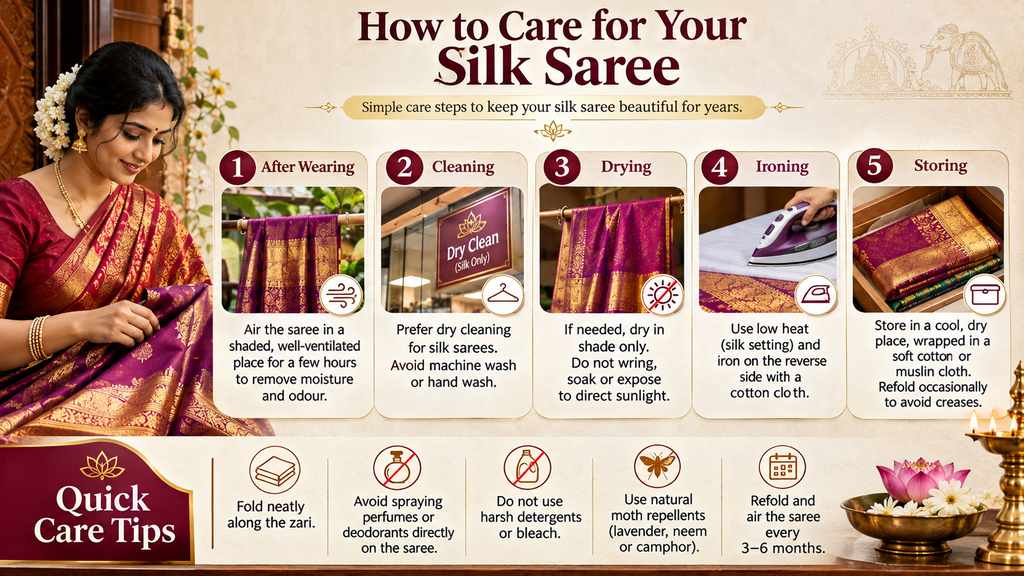
For care, follow the maker’s instructions, since appropriate cleaning can vary with materials and embellishments. Avoid leaving the saree for long periods in direct sunlight, which may affect color, or in damp conditions that can encourage damage. Before storage, ensure it is clean and fully dry; fold it carefully with suitable padding at crease points, or use a breathable wrap in a clean storage space. Refold periodically to reduce prolonged stress along the same creases. When stains or delicate zari require attention, consult a qualified professional cleaner familiar with silk.